Signed in as:
filler@godaddy.com

February 26, 2018
What’s the first thing you think of when you hear “Garland Animal Shelter”?
A dog, most likely. Or a cat. Right?
Probably not a 150-pound box turtle, or a pygmy goat, or a potbelly pig. Or even a nice little red hen! And yet all of those animals as well as many others—snakes, bunnies, chinchillas, ferrets, parrots, sugar gliders, even a big ram!--have come into the shelter over the years. (They chased a llama once, but it ran across the border into Sunnyvale.)
I recently discovered this fascinating side to our shelter when I went there in response to a number of citizens asking my position re: the urgent need for a new shelter. I hadn’t been there in over 10 years, since the last time I adopted a pet—on that occasion a huge Bengal cat. My memories of the shelter from that time were anything but fond. I left wanting to simultaneously cry and take a shower.
At first glance, it was the same bleak and uninviting building I remembered, and the air still smelled like dogs. Only one shelter employee was visible, typing at a computer behind the counter. He didn’t look up and I stood waiting for several long minutes before he finally asked how he could help me.
Once I explained, he introduced me to the shelter supervisor, Hugo Espinoza, who generously spent the next several hours answering my questions and walking me through the entire facility. I also got to speak with several rescue groups that visited during that time. I came away with a flood of conflicting thoughts.
First, beyond any question, we do urgently need a new animal shelter in Garland. Ours is literally the oldest facility (by decades) among similar sized cities in DFW, and the contrasts between Garland’s and the surrounding cities’ shelters are stark. It’s beyond embarrassing.
We’re a big city. We can do better than this.
But there’s more to the story than the bleak building. Like the incorrectly limited vision of the kinds of “clientele” that pass through the shelter and into loving homes, the uninspiring shelter building fails to accurately represent the creative and cheerful team of workers it houses.
First, the animals. During my two recent visits, that was the attitude I encountered in everyone from the Animal Services Manager, Uriel Villalpando, on down through the ranks. The shelter staff are jammed into small spaces, desk-sharing to make room for more kennels, but they’re not complaining. Their tiny “lunch room” features a 1980’s microwave and what looks like a trash-picked refrigerator—no problem for them. Having just come from the beautifully appointed City Hall, I found those shabby working conditions appalling... but what bothers them is that they can’t find a way to fit in even a few more kennels.
“Space,” Uriel replied without hesitation when I asked what he most wanted. “We need more space for the animals.” They have no outdoor space to exercise the dogs. He asked a neighboring business about leasing a strip of their property to create a small play yard next to the shelter, but the owner said no. Uriel still looks at that area longingly.
So what do you do when you’re jammed into a too-small old building and handling thousands of animals a year, including a constant barrage of unadoptable wildlife like rabid skunks and crazy coyotes? Hugo said, “We get creative. We have a growing network of rescue groups, and unlike 10 years ago, we now have families we can call to pick up litters of motherless kittens. We used to have to euthanize them because they just couldn’t survive; now they get bottle-fed till they can eat food.”
I asked him about their live-release numbers, the literal life-and-death marker for a shelter. He said over the last year they’ve been averaging in the high 80’s and low 90’s. Since the definition of a “No-Kill” shelter is a live-release rate of 90% or more, that’s an encouraging report! (Update: the FY 2018 Qtr results were just announced: a 93.3% live release rate for the quarter!) Hugo said that euthanasia is always their “absolute last option”, and aside from dangerous animals and others which are deemed unadoptable, they hold animals until the last kennel is filled.
That’s when things get sad, for the doomed animals and for the staff. For lack of an adequate shelter facility, otherwise adoptable animals do get euthanized. It’s something the staff is constantly brainstorming over to find alternative solutions.
I attended the Animal Services Advisory Committee meeting on 2/23/18 where Uriel shared a number of creative steps they’re taking to move adoptable animals out of the shelter more quickly. I will list them here but for brevity won’t go into details:
Overall, the difference in the atmosphere and performance of the shelter from 10 years ago is impressive, and the staff’s determination to make the best of a bad situation without complaining is nearly heroic. (I learned later that several of the staff are ex-military, which explains a lot. They’re used to much tougher gigs.)
Kris Kober with the Miniature Schnauzer Rescue of North Texas, agrees. “The shelter staff used to have problems 10 -12 years ago,” she said, “but now Hugo and all the guys are wonderful to work with. They are polite, respectful and professional.” Despite the fact that “it’s an ugly facility, not calming to the animals”, she praises the heart and enthusiasm of the workers as “very unusual”.
So what can everyday citizens do to help? Glad you asked.
First, consider adopting a new friend from the Shelter. Think outside the box. Our rescue animals have brought many years of joy to our home. If you’re not a dog or cat person, call and ask about weird animals. Why not? Sugar gliders need love too!
Next, advocate! Speak up in favor of building a new shelter, and for additional resources for the existing shelter. Citizen advocacy makes a huge difference.
Finally, give. Give time if you have it to volunteer at the shelter, or donate money to help sponsor those who want to adopt but can’t afford the $105 adoption fee. Here’s a link where you can do that.
What do I plan to do if elected to the City Council? I will strongly advocate to get the new shelter included in next year’s bond election for starters. The estimated cost to build the new shelter is $15-$16 million, which is significant... but it's been put off for years and needs to get done. We need to keep up the pressure and public scrutiny until it actually happens.
In the meantime, though, I will also advocate for immediate short-term improvements to the existing Animal Shelter—ways to incrementally improve the conditions for both animals and staff while we’re waiting for the new shelter:
Those are just a few of my initial thoughts. I did make the City Manager aware about some of the shelter’s ugly appliance issues, and I understand their antique microwave got sent back to the 80’s and replaced with a new one, and that a good refrigerator is now available.
Are modern appliances critical issues? Of course not—but providing our shelter staff with a decent working environment is one small way of saying, “We appreciate you and respect the job you’re doing.” As one staff member told me, “We’re not a popular department--we’re sort of the oddballs of the City. But we deal with the public more than anybody else, only behind the police and fire department. We’re out there all over the city. We do our best.”
Below: (top) Two actual animals brought into the shelter by Animal Control Officers
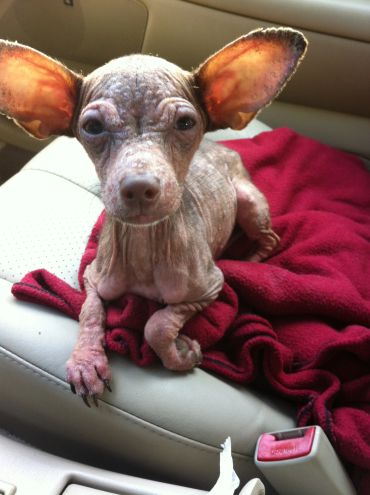
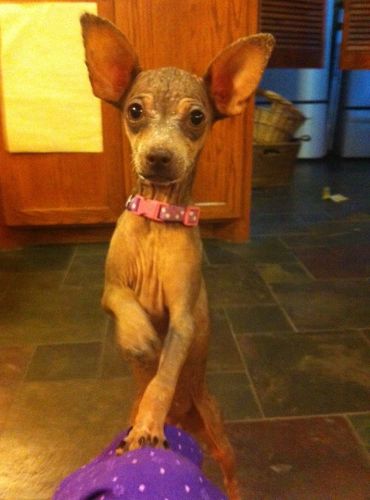
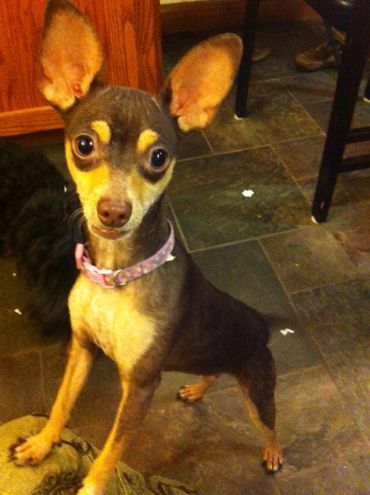
Below: (bottom) Rose, one of our most recent rescue dogs, a stray who was starved and had red mange.